stick insect
Bamboo worms are animals of the bamboo worm family. The shape is slender like bamboo nodes, medium to large, and the body color is mostly green or brown; The head is oval and slightly flattened, with short or slender antennae; Winged, leathery forewings, membranous hindwings; Slender or flattened feet; The body of the bamboo stick insect is elongated and rod-shaped, resembling bamboo sticks (such as bamboo stick insects) or broad-leaved leaves. The lifespan of adult insects is about 3-6 months. Bamboo worms are mostly distributed in tropical and subtropical regions. The main natural enemies are rodents, some species of crows and coiled tails in birds, as well as various ants, spiders, mantises, and color changing tree lizards. Mostly omnivorous.

Brown banded falcon moth larvae
The brown striped falcon moth is distributed in the India Australia region, including India, Sri Lanka, Papua New Guinea, eastern Australia, Solomon Islands, Fiji Islands, and Vanuatu Islands. The larvae have extremely diverse colors, ranging from yellow green and green to brown or gray black. But the common color of larvae is light green.

Chinese Eastern Antfly Larvae
The Zhonghua Dong Antfly is an arthropod of the family Antfly in the order Diptera, also known as the Digu Niu. Yellow with multiple black spots on the head; Most of it is black; There is a large black spot in the center of the lip base; The jawbone is short, the lower lip is long and swollen at the end; Antennae black; There are 6 large black spots on the top of the head, with the middle two slightly separated by a groove, and there are also black spots on the back; The chest is black brown in color, with one yellow longitudinal stripe on each side and center of the pronotum, and one pair of small yellow dots at the proximal end; The middle and posterior chest are almost entirely black brown in color; The abdomen is black, and there are thin yellow edges at the posterior edges of each segment after the fourth segment; The basal ganglia are black, and the transitional ganglia are yellow; The leg and tibia are yellow brown with black spots.
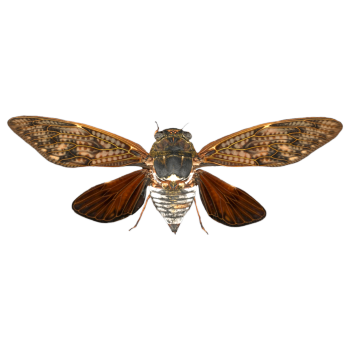
Big brown oil cicada
The Great Brown Oil Cicada is a species of cicada with the scientific name "Graptopsaltria nigrofuscata". Belonging to the Insecta order of the arthropods in the animal kingdom, the Cicadaceae family of the Hemiptera order, and the Cicada genus. This cicada is distributed in East Asia, including Japan, the Korean Peninsula, and China. Large brown cicadas typically have a body length of about 55-60 millimeters and a wingspan of approximately 75 millimeters.

Japanese catalpa beetle
The Japanese catalpa beetle is a beetle belonging to the Lucanidae family, with the scientific name "Prosopocoilus inclinatus". This beetle is distributed in Japan (including Hokkaido, Honshu, Shikoku, Kyushu, Sado Island, Tsushima, Yakushima Island) and the Korean Peninsula.
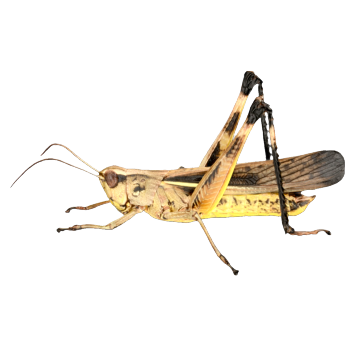
Black edged grasshopper
The black edged grasshopper belongs to the animal kingdom, the phylum Arthropoda, the order Orthoptera, the family Acrididae, and the genus Stethophyma.

Black striped dragonfly specimen
The Black striped Velociraptor is an insect in the family Scolopoda and genus Velociraptor. Males have a belly length of 56-59 millimeters and hind wings of 46-48 millimeters. Male upper and lower lips are yellow, and the anterior edge of the upper lip is black. The base of the front and back lips is green yellow. Green with one black "T" - shaped stripe. The top of the head, antennae, and back of the head are black. The front of the chest and back is green with no markings, while the chest and spine are yellow; Yellow green color on the side of the chest. There is a small black dot above and in front of the stomata. The wings are transparent, the anterior veins are yellow, the wing veins are black, and the wing moles are yellow brown. The abdomen is black with blue spots. The first and second abdominal segments are enlarged, with the base of the first and second segments being green. The lateral sides of the third to seventh segments each have three blue spots and one longitudinal spot of the same color.
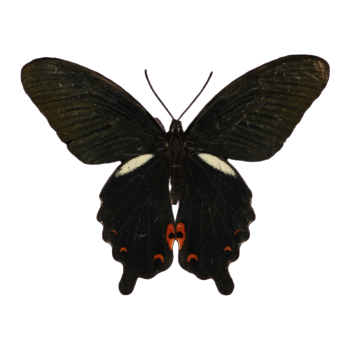
Black Phoenix Butterfly Specimen
The black swallowtail butterfly is a species of the swallowtail genus in the family Papilionidae. Spread the wings 80-90mm wide. The main feature is that the surface of the wings is almost entirely black. The difference between males and females lies in the presence of white strip-shaped transverse spots on the leading edge of the lower wing surface of male butterflies; Female butterflies do not have it, and their wings are lighter in color. Male butterflies have orange red crescent shaped markings on the underside of their lower wings, while female butterflies have more developed markings than male butterflies.

Large shield backed stink bug specimen
The body length is 22-26mm. The color of the back of the body is off white, off yellow, or orange yellow; There is a black longitudinal band in the center of the head and a black transverse band at the back edge; The small bamboo board has a black horizontal band at the front edge and three black stripes in the center. Individuals with developed black spots have a large black spot in the center of the pronotum and 5 black spots on the small sternum. Adults appear in spring and summer, mainly living in low altitude mountainous areas.

Spotted shovel armor specimen
The spotted shovel beetle, a member of the Coleoptera family, is distributed in regions such as Heilongjiang, Shaanxi, Shanxi, Gansu, Henan, Zhejiang, Yunnan, Guizhou, Sichuan, Fujian, Taiwan, and Beijing. The upper palate of male insects is well-developed, resembling the horns of a stag. Many types of horns have finer branches and teeth, and the length of the horns is equivalent to the length of the body, which can cause bleeding on the hands. But some palates are too large, which can become a burden on action. Thick and robust, black or brown in color. However, there are few bright colors.

Spade armor specimen
Spades are a collective term for insects in the order Coleoptera, family Spades, of the phylum Arthropods. The adult body of the shovel beetle is elliptical in shape, black or brown in color, mostly glossy, and has a solid surface; The upper forehead of male insects is mostly large and protruding like deer antlers. Some species have teeth on the upper jaw, while others have forked horns at the end of the upper jaw; The elytra cover the entire abdomen. The spade beetle is named because its shape resembles that of a shovel when its elfin is closed. Spade armor, also known as shovel shaped armor, shovel shaped insect, or deer antler insect.

Spotted shovel armor specimen
The spotted shovel beetle, a member of the Coleoptera family, is distributed in regions such as Heilongjiang, Shaanxi, Shanxi, Gansu, Henan, Zhejiang, Yunnan, Guizhou, Sichuan, Fujian, Taiwan, and Beijing. The upper palate of male insects is well-developed, resembling the horns of a stag. Many types of horns have finer branches and teeth, and the length of the horns is equivalent to the length of the body, which can cause bleeding on the hands. But some palates are too large, which can become a burden on action. Thick and robust, black or brown in color. However, there are few bright colors.

Lishan Tianniu specimen
The longhorn beetle is a general term for insects in the polyphagous suborder of the longhorn family, with a body length of 40-80 millimeters. Gray brown or gray black, with short brownish yellow hairs covering the elytra and entire body. There is a deep groove in the center between the antennae and the two compound eyes, which extends all the way to the top of the head and is deeper at the top of the head. The antennae are almost black. About one and a half times the size of the body, with a notch in the first section; The first section is thick and cylindrical, with a slightly outward protruding rear edge; The third section is relatively long, approximately equal to the sum of the fourth and fifth sections; Sections 7-10 are rod-shaped, with no flat edges, protrusions, or sharp edges on the outer side. The back of the anterior thoracic joint has irregular horizontal wrinkles, with round wrinkles on both sides but no lateral spikes.

Chinese Spade Armor Specimen
The Chinese shovel beetle, also known as the deer beetle, is a member of the family Scaridae in the order Coleoptera. Significant changes in body length, presenting a male female dimorphism; There are three types of males: large, medium, and small; The male insect's body color is dark black except for the reddish brown outer edge of the elytra. Belonging to the order Coleoptera and family Scaridae, it is a completely metamorphosed insect that undergoes four stages in its life: egg, larva, pupae, and adult. The larvae overwinter in decaying wood and reproduce once a year.

Saw shovel shaped worm specimen
Prosopocoilus inclinatus, also known as serrated shovel worm, is a species of insect in the family Prosopocoidae. Distributed in Japan and South Korea. The sawdust beetle is named after its serrated, horn like curved jaws, which likely evolved to compete with the unicorn fairy for resin. The larval stage lasts for 1-3 years, while the pupal stage lasts for over a month. Adult males measure 26-74.5 millimeters, while females measure 19.5-41 millimeters.

Giraffe saw shovel specimen
The giraffe saw shovel is an insect in the family Scaridae, with a long upper jaw and serrated teeth. Giraffe saws and shovels live in Southeast Asia. The body length is 4-12 centimeters. It has the longest upper jaw and the sharpest serrations in the shovel armor. The end of the upper jaw has two forks, and the teeth on the left and right sides are asymmetrical and slightly curved. The protruding teeth on the upper jaw may appear aggressive, but in reality, the biting force is not strong. The tips of the teeth may appear sharp, but in reality, they are easily broken. There is also a glossy black shell. But the female insect does not have an upper jaw, while the young male insect likes to fight. The male insect's tooth roots are highly destructive and can cause certain injuries to various shovels.

Specimen of Cichlid
Cichlids, also known as "cicadas", are insect species. Category: Cicadaceae, Cicadaceae/Hemiptera, with two pairs of wings, both front and rear wings are membranous wings, and the mouthparts are piercing sucking. The body length is about 2.5cm. It is a relatively small cicada, with a purple blue color and black stripes. Its hind wings are black except for the edges, and it is widely distributed. It chirps from May to June, from morning till night, with a "chup chup" sound. Its call is not as loud as that of large cicadas such as black cicadas, and it is relatively fragile. Not as loud as large cicadas. There are also larger cicadas.

Japanese Copper Luo Flower Golden Turtle Specimen
The body length of the Japanese copper dragon flower golden turtle is 25-29mm, and the width is 12-14.5mm. It is relatively large and slightly shiny. The head, anterior thorax, and small scutum are mostly dark olive green or dark green with red coloration, and the yellow flesh is below. The antennae, most of the leg joints, tibia, and tarsal joints are dark brown, near dark green or black. The upper part of the lip base is nearly square, with a high longitudinal protuberance and dense circular engraved points. The leading edge is curved and slightly curved, and the back is smooth with almost no engraved points. The anterior thoracic and dorsal plates are densely covered with deep circular incisions, while the disc area has relatively small incisions. The base is the widest and gradually narrows forward on both sides, with a narrow border. The posterior corner is slightly rounded, the posterior edge is horizontal, and the concave is shallow.

Double Forked Rhinoceros Turtle Specimen
The Double Forked Rhinoceros Beetle, also known as the Unicorn Fairy, is an animal of the family Scaridae in the genus Scarabacus. The adult double forked rhinoceros beetle has a body length of 30-50mm and a body width of 20-30mm. Its body is elliptical in shape, with smooth or slightly furry surfaces on the back, and more furry surfaces on the abdomen; The head is small, the compound eyes are deep reddish brown, and the antennae have 10 segments, of which the gill section consists of 3 segments. The upper lip is flat and shovel shaped with an upward curl. Distributed in eastern and northeastern China, Japan, Thailand and other places, living in forests, with strong phototaxis. Adults feed on humus formed from decaying leaves or wood under the forest, and prefer to lick the sap or ripe fruits flowing from tree wounds.

Popular Models
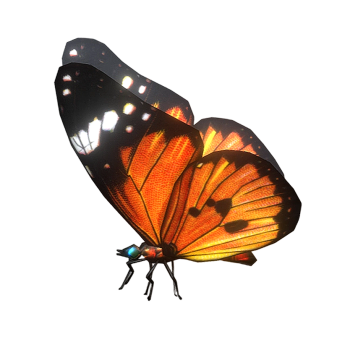
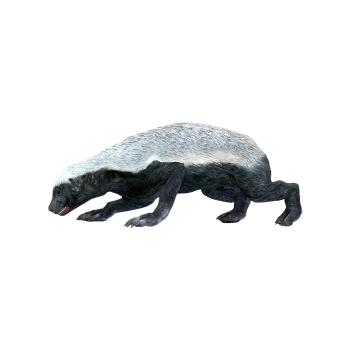
Honey Badger (3D animated model)
192 View
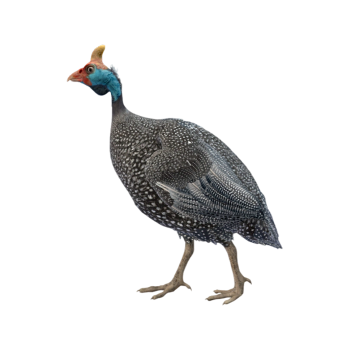
Guinea fowl (3D animated model)
163 View
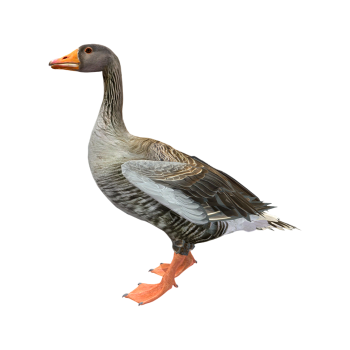
Wild Goose (3D animated model)
185 View
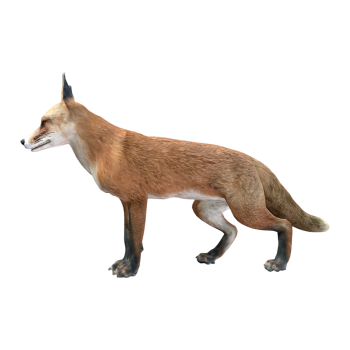
Red Fox (3D animated model)
153 View
Random Model


Black cherry saplings
1124 View


Andean bald eagle skull
1116 View

Under Armour HOVR Apex 2 sneaker
776 View